If you are shopping or selling in Brentwood, one question matters more than most: what kind of Brentwood are you really talking about? A home in the flats, a hillside property north of Sunset, and a canyon estate can all share the same Brentwood name while appealing to very different buyers and carrying very different value drivers. If you understand those differences, you can make a smarter move whether you are buying for lifestyle or selling for maximum return. Let’s dive in.
Brentwood Is Not One Uniform Market
Brentwood is best understood as a group of overlapping submarkets rather than a single housing type. City of Los Angeles planning materials describe the area as mostly single-family and low-density, with flatter grid-patterned streets south of San Vicente and more topographic variation north of Sunset in areas like Mandeville Canyon and Kenter Canyon.
Those same planning materials identify several distinct Brentwood neighborhoods, including Brentwood Park, Brentwood Glen, Mandeville Canyon, Kenter Canyon, and Crestwood Hills. That matters because pricing, lot utility, and buyer expectations can shift quickly from one pocket to the next.
Current market data also show why broad averages only tell part of the story. In 90049, Zillow reports an average home value of $3,032,602 and a median sale price of $2,266,667, with homes going pending in about 40 days. Redfin reports a 96.1% sale-to-list ratio, 16.3% of homes selling above list, and 29.5% with price drops, which points to an active but selective market.
Brentwood Flats Offer Convenience
The flats are the most accessible and straightforward part of Brentwood. South Brentwood is described in SurveyLA materials as gently sloping, with grid-patterned subdivisions west of the 405 and relatively easy street layouts between San Vicente and Sunset.
For many buyers, this part of Brentwood offers the simplest daily living experience. Streets are generally more regular, lots are more predictable, and the product often feels easier to compare from one block to the next than in the hills or canyons.
What Defines the Flats
The flats include areas such as Brentwood Glen, Brentwood Park, and other south-Brentwood streets where topography is less dominant. Brentwood Glen is described as denser in layout than many other Brentwood neighborhoods, while Brentwood Park reflects an earlier streetcar-era subdivision pattern with generous setbacks and larger homes on larger lots.
That contrast is important. Even within the flats, Brentwood Glen and Brentwood Park are not interchangeable products, and buyers usually feel that difference immediately.
Lot Sizes in the Flats
In Brentwood Glen, representative current listings cluster around roughly 4,900 to 6,200 square feet of land, with examples at 4,927, 5,499, 5,750, and 6,191 square feet. A South Bundy example sits on a 7,784-square-foot flat lot with rear-alley access.
Brentwood Park, by contrast, trends much larger. Current and recent examples include a half-acre flat corner lot, a 0.35-acre lot, and a 0.46-acre estate lot, with some historic lot patterns exceeding an acre.
Style and Buyer Appeal in the Flats
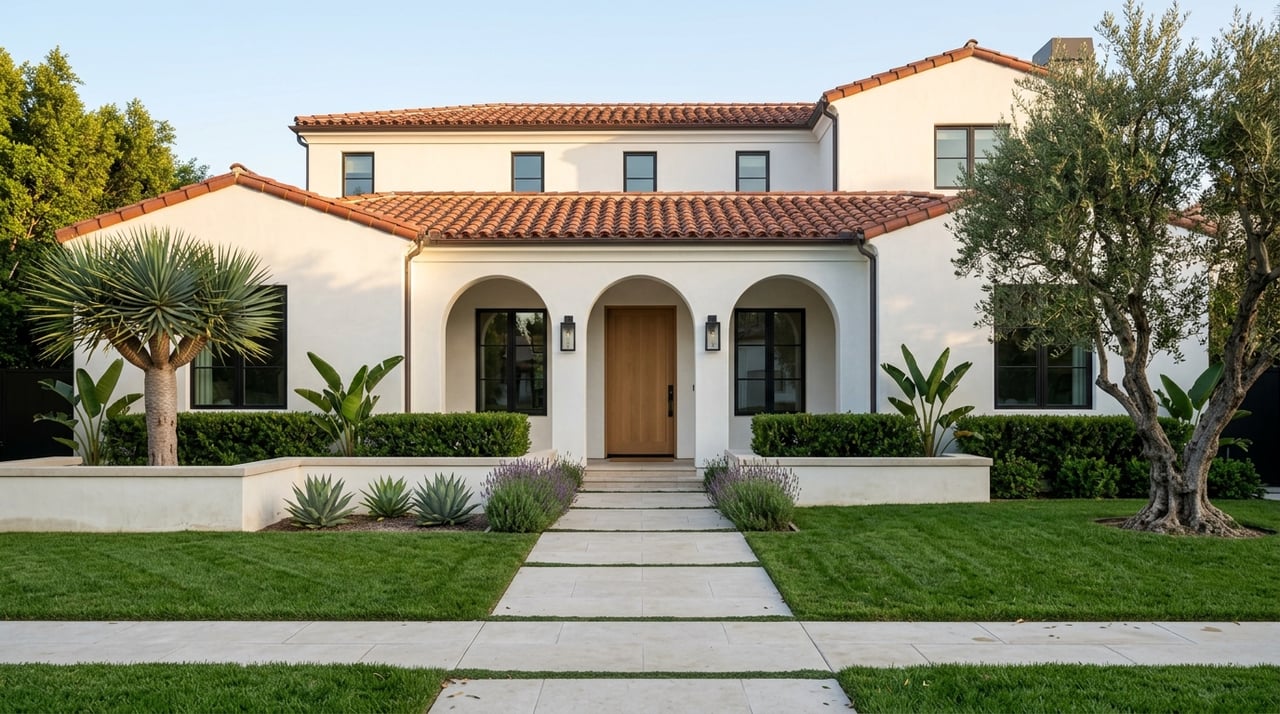
Architecturally, the flats often deliver classic Los Angeles curb appeal. SurveyLA notes that Brentwood Park originally featured American Colonial, Spanish Colonial, Tudor, early Modern, and Ranch homes, while later infill often echoes those older styles at a larger scale.
In Brentwood Glen, current listings show a mix of traditional, cottage, and duplex-type homes. In this segment, value is often shaped by street appeal, lot quality, privacy hedges, and remodel potential just as much as views.
Pricing Patterns in the Flats
Pricing in the flats covers a wide range. Brentwood Glen trend data show a $2.4 million sale price, roughly $1.38K per square foot, and 48 days on market.
At the same time, examples in the broader flats market range from a $1.749 million Brentwood Glen home on a 5,499-square-foot lot to a $4.495 million new build on a 6,000-square-foot lot. In Brentwood Park, examples include a $10.68 million estimate on Cliffwood, a $12.96 million sale on Bundy, and a $17.1 million sale on Cliffwood.
The takeaway is simple: in the flats, street pedigree and lot quality can matter more than house size alone.
Brentwood Hills Emphasize Views and Design
Once you move north of Sunset and the terrain becomes more demanding, the value equation changes. The hill submarket includes Brentwood Hills, Crestwood Hills, and upper Kenter, where topography, view corridors, and architectural fit often play a bigger role in pricing.
SurveyLA notes that postwar building activity moved further up the canyons after World War II. Crestwood Hills, in particular, was developed on 800 acres in upper Kenter Canyon as a cooperative housing project, with planning materials emphasizing limited grading, preserved views, stepped lots, and privacy-oriented siting.
What Buyers Often Find in the Hills
Representative hillside parcels are usually larger than Brentwood Glen lots but smaller than the biggest canyon estates. Current listings and recent sales include 0.26-acre, 0.5-acre, and 0.51-acre lots, along with roughly 9,700- to 10,200-square-foot sites.
These lots often support mid-century modern, architect-driven, and contemporary homes rather than the more conventional forms common in flatter sections. Redfin examples specifically identify homes in Brentwood Hills or Crestwood Hills as mid-century, modern architectural, or architect pedigree properties.
How the Hills Are Priced
In the hills, pricing is heavily influenced by view, architecture, and the usability of the site. Current examples include a $2.16 million Crestwood Hills estimate on a 0.51-acre lot, a $3.49 million estimate on a 0.26-acre Brentwood Hills lot, and a $4.4 million sale on a 10,218-square-foot Brentwood Hills parcel.
Higher-end examples show how quickly pricing can rise when design and site quality align. Reported sales and listings include a $7.77 million sale on a 0.5-acre modern home near the hills and an $8.75 million Brentwood Hills listing on a 9,727-square-foot lot.
For buyers, that means the hill premium is rarely just about raw lot size. It is more often tied to view corridors, architectural pedigree, and buildable privacy.
Canyon Homes Prioritize Land and Privacy
Canyon properties are the most site-dependent homes in Brentwood. In areas such as Mandeville Canyon and canyon-edge streets, lot shape, access, driveway geometry, privacy, and topography move to the center of the conversation.
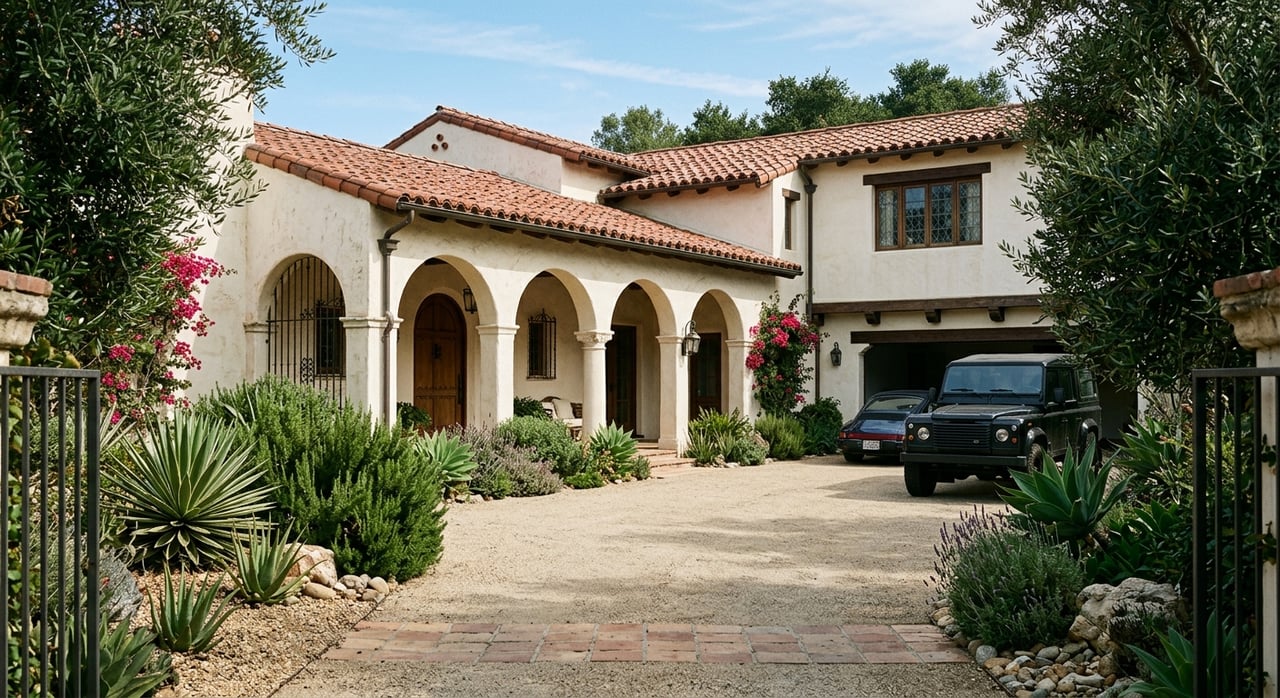
SurveyLA describes Brentwood’s canyon streets as meandering patterns shaped by topography, and notes that postwar development in the canyons was often oriented around horse properties. That helps explain why canyon homes can feel far more secluded and individualized than homes in the flats.
What Makes Canyon Properties Different
The land profile in the canyons is materially different from the rest of Brentwood. Representative current canyon parcels include a 10,347-square-foot rebuilt Mandeville Canyon home, a 0.63-acre lower-canyon parcel, a nearly 20,000-square-foot gated compound, a 1.73-acre canyon estate, and a 5.95-acre vacant lot.
That is a much wider and more irregular range than what you typically see in the flats or hills. It also explains why two canyon properties with similar home sizes can have very different values.
Canyon Pricing Can Swing Widely
Architecture in the canyons ranges from rebuilt ranch-style compounds and legacy estates to custom luxury homes. Recent examples include a Mandeville Canyon listing at $4.675 million, a sold Mandeville Canyon home at $6.225 million, a 1.73-acre gated estate, and a nearly two-acre compound.
Comparable high-end Brentwood sales used in nearby upper-hills pricing also reached $11.7 million, $13 million, and $18.05 million. In practical terms, canyon pricing tends to be driven by land assemblage, privacy, and estate potential more than by repeatable tract-style comparisons.
Site Risk Matters in Brentwood
In Brentwood, topography is not just a design issue. It can be central to ownership, value, and marketability.
The City of Los Angeles Safety Element states that the Very High Fire Hazard Severity Zone includes portions of Brentwood, especially in hilly and mountainous areas. The city also notes that parcels can be reviewed individually through local mapping tools and that local fire stations are part of the area’s safety framework.
Brentwood-Pacific Palisades survey materials also note that the area has been periodically affected by fires and landslides. For buyers, that means lot access, slope, and parcel configuration deserve careful attention. For sellers, it means property presentation should address site strengths clearly and factually.
How to Choose the Right Brentwood Setting
The best choice depends on what you value most in day-to-day ownership. Brentwood flats, hills, and canyon homes can all be excellent options, but they offer different tradeoffs.
If you want easier access, more predictable lot shapes, and classic street-oriented appeal, the flats may be the best fit. If you want stronger views, more architectural individuality, and a more elevated setting, the hills may be worth the premium. If you want maximum privacy, larger land, and estate or compound potential, the canyons may offer the most compelling opportunities.
Here is a simple way to frame it:
- Flats: convenience, classic Brentwood character, easier comparability
- Hills: views, design, privacy-oriented siting
- Canyons: land, seclusion, compound potential
What Sellers Should Know Before Pricing
If you are selling in Brentwood, one of the biggest mistakes is relying too heavily on Brentwood-wide averages. A Brentwood Glen home on a 5,000- to 6,000-square-foot lot, a Brentwood Park estate parcel, a Crestwood Hills mid-century on a half-acre view lot, and a Mandeville Canyon compound are all part of Brentwood, but they are not competing in the same lane.
That is why micro-market positioning matters. Pricing, presentation, and buyer targeting should reflect the specific subarea, the lot, the architecture, and the site constraints or advantages.
For higher-value properties, that level of detail can shape both speed and outcome. A disciplined strategy can help highlight what is actually driving value rather than relying on a generic neighborhood label.
If you are weighing where your property fits or how to position it for today’s selective Brentwood market, Alphonso | Bjorn can help you evaluate the lot, the micro-area, and the story that will resonate most with qualified buyers.
FAQs
What is the difference between Brentwood flats and Brentwood hills?
- The flats are generally more accessible and have gentler streets and more predictable lots, while the hills tend to offer more topography, stronger views, and greater emphasis on architecture and privacy.
What makes Mandeville Canyon homes different from other Brentwood homes?
- Mandeville Canyon homes are typically more site-dependent, with pricing shaped by land size, privacy, access, driveway geometry, and estate potential.
Are Brentwood Glen and Brentwood Park similar markets?
- No. Brentwood Glen generally has smaller lots and lower entry pricing, while Brentwood Park includes much larger flat parcels and significantly higher estate-level pricing.
Why do Brentwood home prices vary so much by location?
- Brentwood includes several distinct submarkets, and values can change based on lot size, street pedigree, views, privacy, access, architecture, and topography.
What should Brentwood sellers focus on before listing?
- Brentwood sellers should focus on micro-market pricing, lot-specific strengths, and a presentation strategy that matches the property’s exact subarea and buyer pool.